Why Timbers Check and Crack (And Why It's Normal)
Updated: February 10, 2026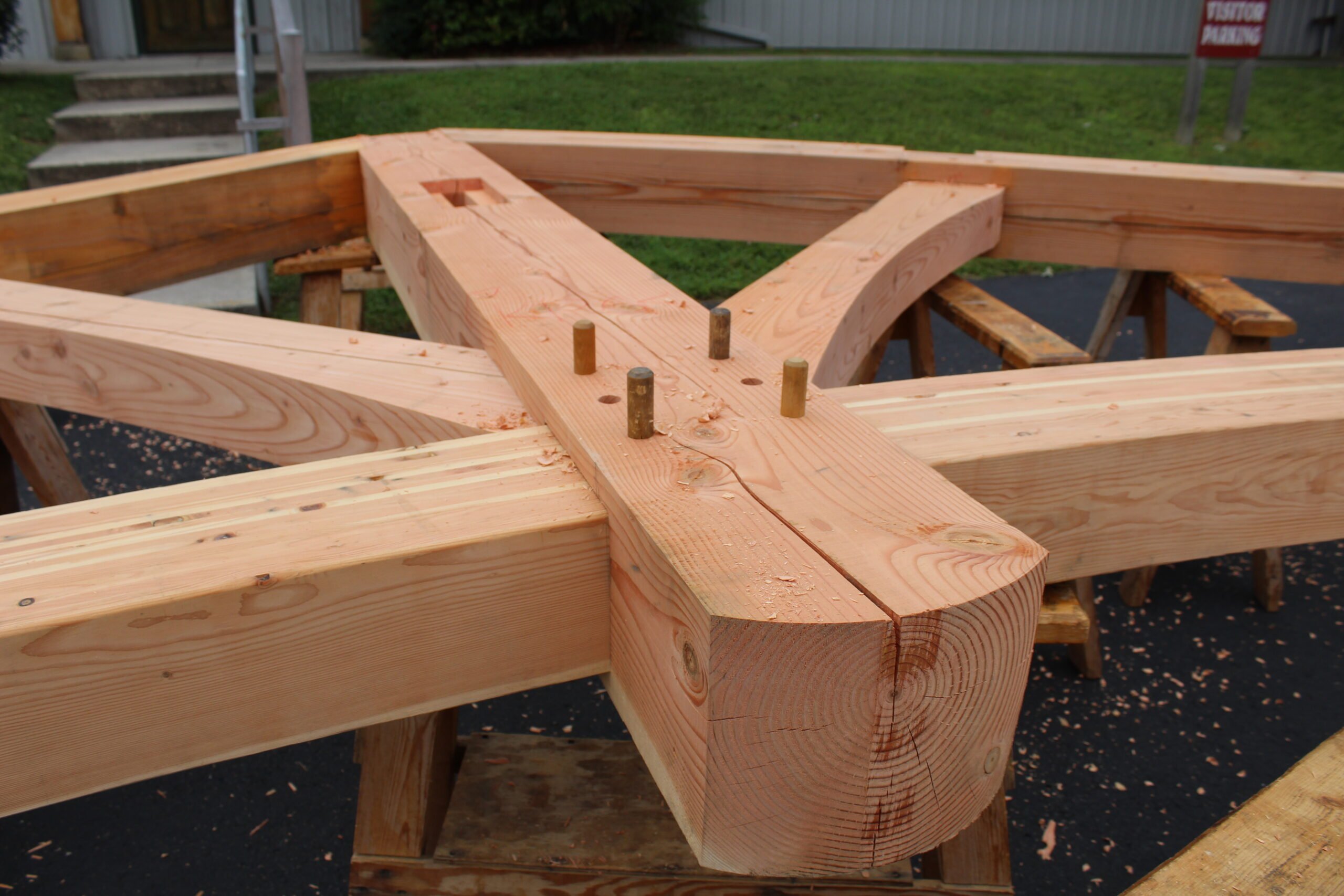
You just invested in a beautiful timber frame home, and within months, you notice cracks forming along the beams. Panic sets in. Is the building failing? The truth is far less alarming and actually quite fascinating.
Those splits and checks are a completely natural part of how timber behaves after installation. Rather than indicating weakness, they often reveal that your wood is doing exactly what quality timber should do as it acclimates to its environment.
Understanding why this happens will put your mind at ease and help you appreciate the living nature of wood.
What Timber Checks Actually Are
A timber check is a separation of wood fibers that creates a visible crack along the length of a beam or post. These splits typically run parallel to the grain and appear on the surface or extend into the interior of the timber.
Checks are different from structural cracks that might result from overloading or improper installation. Instead, they represent the wood's natural response to changes in moisture content.
The term "checking" specifically refers to these longitudinal separations, while "splits" generally describe more severe separations that may extend completely through a timber's cross-section.
Most checking is superficial, affecting only the outer layers of wood without compromising the beam's load-bearing capacity. The appearance can range from hairline surface checks barely visible to more pronounced cracks that might be a quarter-inch wide or more.
Why Timber Splits and Cracks
Wood is hygroscopic, meaning it constantly exchanges moisture with its surrounding environment until reaching equilibrium.
When a tree is first cut, it contains a high percentage of water, sometimes more than half its weight. As this green timber dries, the outer layers lose moisture faster than the inner core, creating uneven shrinkage that produces tension within the wood.
Checking actually releases this built-up tension in the wood, allowing the timber to stabilize at a new moisture content without warping or twisting.
This process doesn't stop once initial drying occurs. Timber continues responding to seasonal humidity changes, though the most dramatic checking typically happens during the first few years after installation as the wood acclimates to indoor or protected conditions.
Where Timber Checks Appear
Checks follow predictable patterns based on wood anatomy and drying physics. The most common checking occurs along radial lines extending from the center of the log toward the outer edge, following the path of medullary rays in the wood's cellular structure.
Large timbers are more prone to checking than smaller dimensional lumber because the moisture gradient between exterior and interior is more extreme.
A 12-inch by 12-inch post will check more dramatically than a 2-inch by 6-inch board simply because it takes much longer for the core to dry.
Exposed faces check more than protected surfaces. Timbers with four sides exposed to air will typically develop checks on multiple faces, while those with concealed surfaces may check primarily on exposed faces where moisture loss is greatest.
South-facing timbers often show more checking than those in shaded positions due to increased heat and faster moisture loss.
Boxed heart timbers, where the pith of the tree is contained within the timber, almost always develop a check through the center. This happens because the pith area has the greatest moisture content differential and the most internal stress as drying occurs.
How Checking Strengthens Traditional Joinery
Traditional mortise and tenon joints actually benefit from controlled checking. When a tenon is cut to fit into a mortise, the joint relies on tight-fitting surfaces and wooden pegs for strength.
As the tenon checks and shrinks slightly, it can actually tighten around the pegs rather than loosening.
Checking tends to occur perpendicular to growth rings, which means checks often run across the width of a tenon rather than along its length. This allows the tenon to maintain its length and primary bearing surfaces while relieving stress in less critical dimensions.
Timber framers throughout history recognized this phenomenon. Traditional joinery techniques were developed with the understanding that wood would move and check over time.
The fact that centuries-old timber frames remain standing with extensive checking visible throughout proves these characteristics don't compromise structural integrity when properly incorporated into design.
Green Timber vs. Kiln Dried: Different Checking Patterns
The initial moisture content of timber when installed dramatically affects how much and how quickly checking occurs.
Green timber will experience the most dramatic checking as it dries in place. Kiln-dried timber has already undergone much of its shrinkage and checking before installation.
Green timber offers certain advantages despite increased checking. The wood is easier to work with traditional hand tools when green, and as it dries in its installed position, the joinery actually tightens up.
Kiln-dried timber shows less dramatic checking, but checks can still develop as the wood equilibrates to its final environment.
Neither approach eliminates checking entirely. The choice between green and kiln-dried timber depends on project requirements, timeline, budget, and design philosophy.
What's Normal and What's Not
While most checking is harmless, certain cracks do warrant attention. Normal checking runs parallel to grain, radiates from the timber's center, stabilizes within two to three years, and shows no displacement between surfaces.
Signs requiring evaluation include cracks running perpendicular to the grain, which may indicate overloading or impact damage.
Cracks that continue widening beyond the initial settling period could suggest ongoing moisture problems or structural issues. Any crack with displacement should be evaluated by a structural engineer.
Cracks near joints deserve particular attention. While checking near joinery is common, cracks that compromise the bearing surface of a joint or allow a tenon to split from its peg could affect structural performance.
Discoloration, decay, or insect activity around cracks indicates moisture intrusion or other problems beyond simple checking.
Preventing Excessive Checking
Complete prevention of checking is neither possible nor desirable, but understanding what influences checking severity allows for management of its extent.
Proper timber selection influences checking from the start. Quarter-sawn timber checks less than flat-sawn timber due to growth ring orientation. Climate control in enclosed structures helps timber reach stable moisture content without excessive checking.
Gradual introduction of heating and cooling, avoiding extreme humidity swings, and maintaining consistent conditions allow timber to adjust without dramatic movement. Protecting timber from direct sun and wind during initial drying reduces surface checking as well.
Moisture loss occurs much more rapidly through end grain. Applying end-grain sealers immediately after cutting slows moisture loss and reduces checking severity.
Applying finishes affects checking in complex ways. Heavy film-forming finishes that seal the wood surface can actually increase internal checking by preventing even moisture release.
Penetrating oils and breathable finishes allow for more natural moisture exchange and may result in more superficial but less severe checking overall.
Embrace the Natural Checking Process
Timber checking represents one of wood's most fundamental characteristics—its responsiveness to environmental moisture. These cracks aren't manufacturing defects or installation errors but natural expressions of wood drying and stabilizing.
Traditional joinery techniques evolved specifically to work with this behavior, not against it.
When you see checks developing in your timber frame, you're witnessing a process that has occurred in wooden structures for thousands of years without compromising their remarkable longevity or strength.
Dreaming of a timber frame home that will last for generations to come? Book your free consultation call with Homestead Timber Frames today to start designing your new custom home.
Frequently Asked Questions
What causes checking in timber?
Checking occurs when the timber's outer layers dry faster than the interior core, creating uneven shrinkage and internal tension. As wood releases moisture to reach equilibrium with its environment, this tension is relieved through longitudinal cracks along the grain, most dramatically during the first few years after installation.
What is the difference between a check and a shake?
A check is a separation that develops as timber dries, running along the grain due to moisture loss. A shake is a separation between growth rings caused by wind stress, disease, or growth defects that existed in the living tree before cutting. Checks result from normal drying; shakes are pre-existing defects.
How to stop wood from checking?
You can't completely stop checking, but you can minimize it. Apply end-grain sealer immediately after cutting to slow moisture loss. Protect wood from direct sun and wind during initial drying. Use quarter-sawn timber, which checks less than flat-sawn. Maintain consistent climate conditions, and avoid rapid humidity swings.
How to fix checking in wood?
Most checks don't require repair since they're cosmetic and don't affect structural integrity. For aesthetic concerns, fill shallow checks with colored epoxy or wood filler matched to the timber. For deeper checks, use flexible caulk that accommodates wood movement. Verify the check is stable before filling.