How To Choose a Timber Frame Company
Updated: February 23, 2026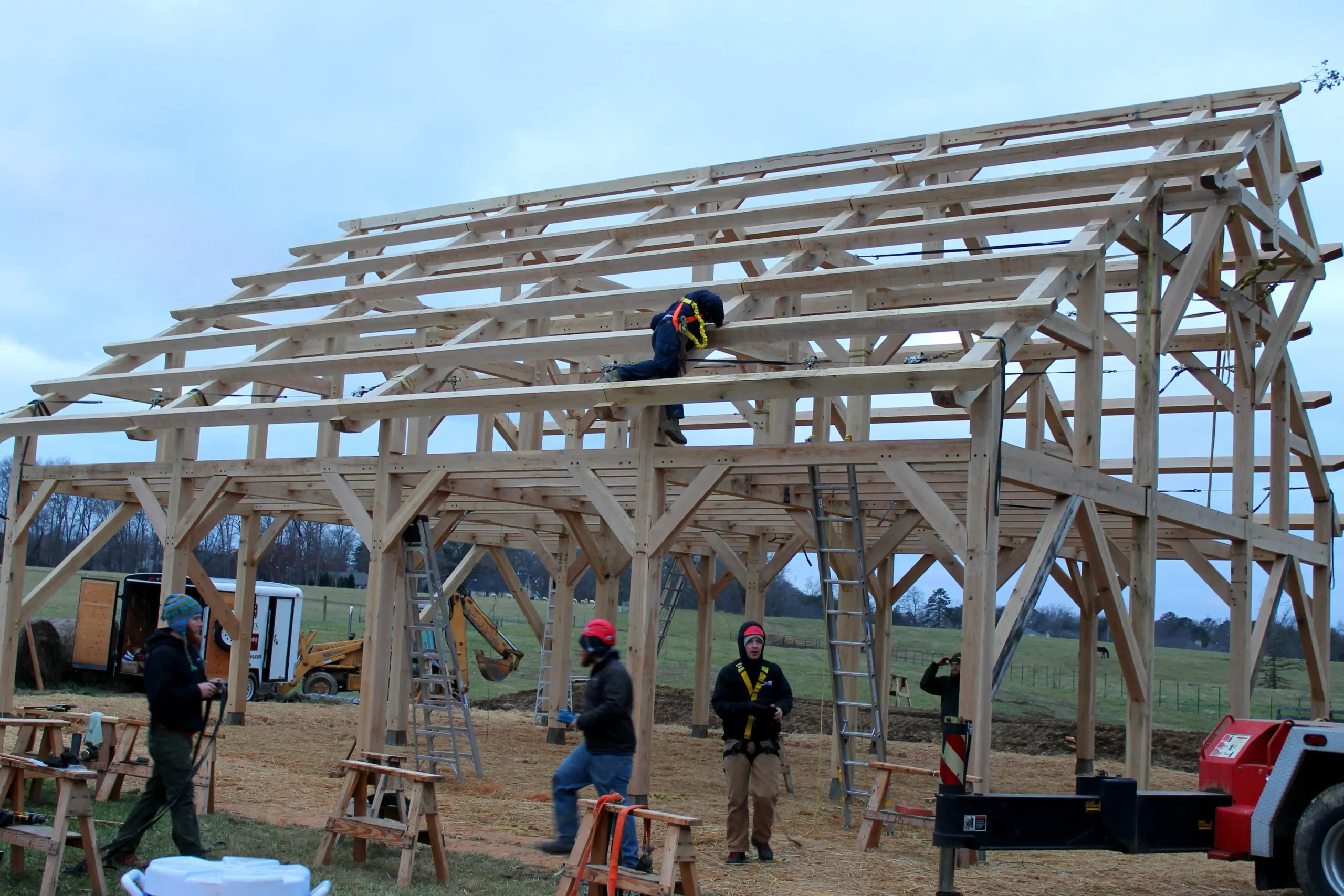
Choosing a timber frame company is one of the most important decisions you’ll make when planning your build. Timber framing combines structural engineering, fine craftsmanship, and long-term material performance, leaving little room for error.
The right partner will guide you through design, sourcing, fabrication, and installation with transparency and technical expertise.
Before you commit, it’s essential to ask the right questions. Doing so protects your investment and ensures your finished home reflects both structural integrity and architectural vision.
Experience and Specialization in Timber Framing
Not all construction companies approach timber framing with the same level of expertise.
Some general contractors may offer timber elements as part of broader building services, while dedicated timber frame specialists focus exclusively on designing, fabricating, and raising structural timber systems.
Because timber framing relies on precise joinery, load calculations, and material performance, experience directly affects structural integrity and long-term durability.
A company with a strong portfolio will demonstrate not only craftsmanship but also familiarity with regional building codes, climate considerations, and complex architectural designs.
Questions To Ask:
- How many timber frame projects have you completed?
- How long have you specialized in timber framing?
- Can I see projects similar in size and complexity to mine?
- Do you handle hybrid builds or only full timber frames?
- Have you worked in my region before?
Design and Engineering Process
A timber frame home is only as strong as the design and engineering behind it. Beyond aesthetics, every beam, joint, and connection must be carefully calculated to handle structural loads, environmental forces, and long-term movement in the wood.
Reputable timber frame companies either employ in-house engineers or work closely with licensed structural professionals to ensure accuracy and code compliance.
Clear communication between the timber framer, architect, and general contractor is also essential to avoid costly revisions or misalignment during construction.
Ask how the company develops shop drawings, reviews structural details, and manages revisions before fabrication begins. A well-defined design process should feel collaborative, transparent, and technically rigorous from start to finish.
Questions To Ask:
- Is structural engineering handled in-house or outsourced?
- Will I receive stamped, code-compliant engineered drawings?
- How do you coordinate with my architect or builder?
- What is your process for revisions before fabrication?
- How do you account for regional snow, wind, or seismic loads?
Insurance, Licensing, and Legal Protections
Timber frame construction involves heavy materials, specialized equipment, and significant financial investment, which makes proper licensing and insurance essential.
A reputable company should carry general liability insurance and workers’ compensation coverage to protect both you and its crew. Licensing requirements vary by state, but compliance demonstrates professionalism and accountability.
In addition to verifying credentials, review the company’s contract carefully. It should clearly define the scope of work, payment schedules, change order procedures, warranties, and dispute resolution terms.
Strong legal documentation protects both parties and minimizes misunderstandings throughout the project.
Companies that hesitate to provide proof of insurance or detailed contracts may expose you to unnecessary risk. Transparency in this area signals operational maturity and long-term stability.
Questions To Ask:
- Are you properly licensed in my state?
- Can you provide proof of liability and workers’ comp insurance?
- What warranties do you offer on materials and craftsmanship?
- How are scope changes documented and approved?
- What protections are included in your contract?
Timber Sourcing and Material Quality Standards
The beauty and durability of a timber frame structure begin with the quality of the wood itself. Not all timbers are equal in strength, stability, or appearance.
Reputable companies are transparent about species selection, such as Douglas fir, white oak, or other regionally appropriate woods, and can explain why certain materials are recommended for your climate and design.
Moisture content is another critical factor. Properly kiln-dried or carefully managed green timber affects shrinkage, checking, and long-term performance.
Ask about grading standards, inspection procedures, and whether materials are sourced from sustainably managed forests. Responsible sourcing not only supports environmental stewardship but also signals attention to consistency and supply reliability.
A professional timber frame company should be able to trace its materials and clearly articulate the performance expectations of each species used in your project.
Questions To Ask:
- What species do you recommend and why?
- Is the timber kiln-dried or green?
- What moisture content standards do you follow?
- Where is your wood sourced?
- Do you follow recognized grading or sustainability standards?
Craftsmanship and Fabrication Methods
Timber framing blends structural engineering with fine craftsmanship. The methods a company uses to cut and assemble its timbers can significantly influence precision, fit, and long-term strength.
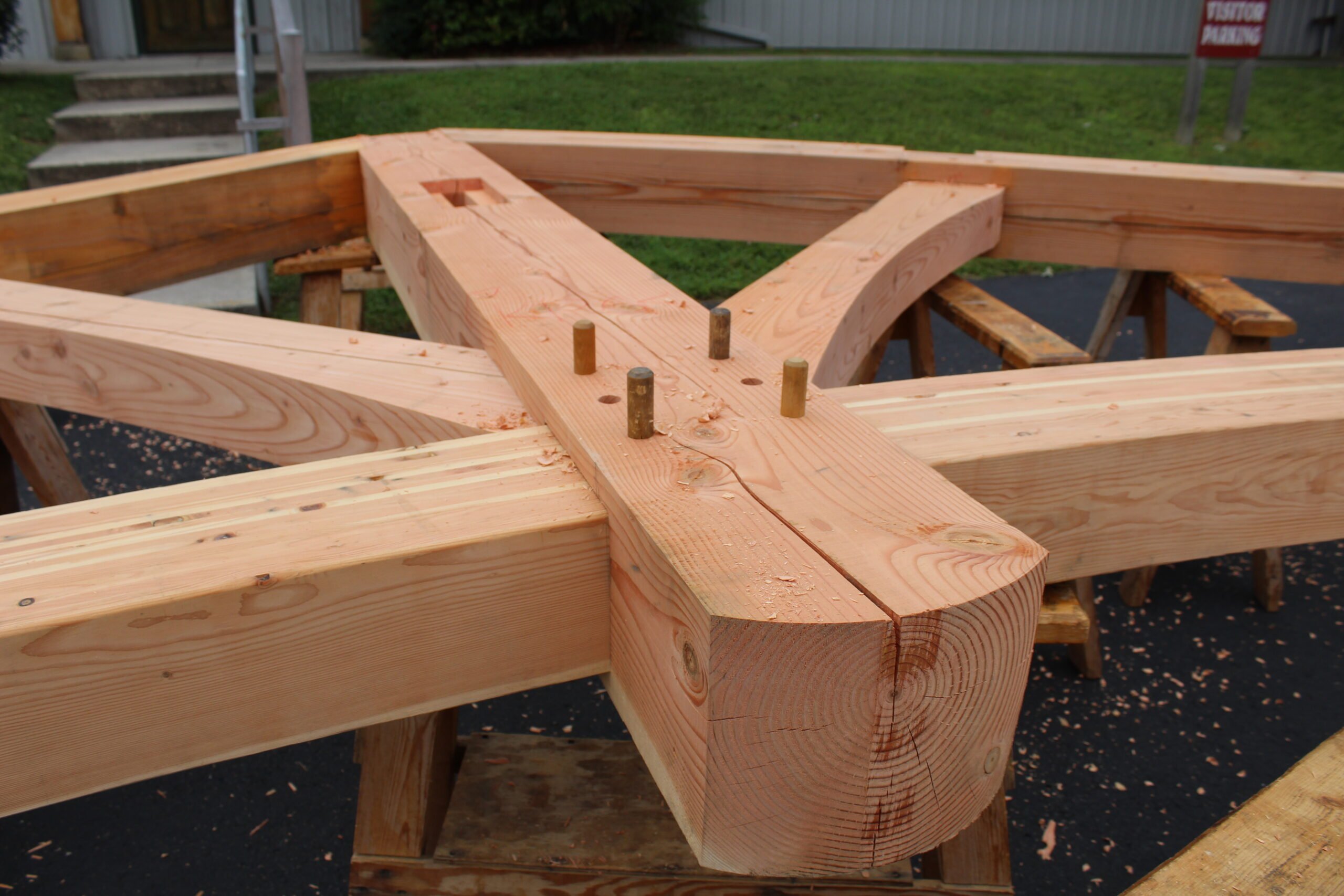
Some firms rely primarily on traditional mortise-and-tenon joinery secured with hardwood pegs, while others incorporate steel connectors or hybrid systems, depending on design needs.
Modern CNC machinery can provide exceptional accuracy and efficiency, while experienced artisans may refine joints by hand to ensure tight tolerances. Neither approach is inherently superior, but transparency about fabrication methods is essential.
Ideally, timbers are fabricated in-house under controlled conditions before being transported to the job site for raising.
Observing completed projects, or even touring the fabrication shop, can provide valuable insight into the company’s workmanship standards and attention to detail.
Questions To Ask:
- Do you use traditional joinery, steel connectors, or both?
- Is fabrication performed in-house?
- What equipment or technology do you use?
- Can I tour your shop or see work in progress?
- How do you ensure precision and quality control?
Customization and Design Flexibility
One of the greatest advantages of timber framing is the ability to create a truly distinctive home. However, not all companies offer the same level of flexibility.
Some specialize in fully custom designs tailored to your site, lifestyle, and architectural preferences, while others primarily modify pre-existing plans. Understanding where a company falls on this spectrum helps set expectations early.
A strong timber frame partner should be willing to collaborate closely, refining layouts, spans, rooflines, and decorative elements without compromising structural integrity.
Ask how design changes are evaluated, priced, and approved. The ability to adapt thoughtfully during early planning can prevent costly revisions later.
Ultimately, customization should feel intentional—not improvised—and be guided by both creative vision and engineering discipline.
Questions To Ask:
- Are your designs fully custom or based on templates?
- How are modifications to existing plans handled?
- At what stage can design changes be made?
- How do changes affect engineering and cost?
- Do you provide 3D renderings or visualizations?
Price Structure and Payment Terms
Timber frame pricing is rarely a single all-inclusive figure. Costs may include design fees, structural engineering, fabrication, timber sourcing, hardware, delivery, and on-site raising. Clarifying what is included and what is not prevents misunderstandings and budget overruns.
Some companies operate on fixed-price contracts, while others use cost-plus models that adjust with material or labor changes. Payment schedules are equally important, as substantial deposits are often required to secure materials and begin fabrication.
A transparent company will clearly outline milestones, invoicing procedures, and change order policies in writing. Understanding how adjustments are documented and approved protects both parties and promotes financial clarity throughout the project.
Careful review of pricing structure can reveal a company’s organization, stability, and commitment to professional standards.
Questions To Ask:
- What is included in your base price?
- Are engineering and shop drawings included or billed separately?
- What payment schedule do you require?
- What deposit is due upfront?
- How are change orders priced and approved?
- Are there allowances that could increase final costs?
Project Timeline and Installation Process
Timber frame construction requires precise sequencing between design, fabrication, delivery, and on-site assembly. A clear timeline demonstrates organizational discipline and realistic planning.
Ask how long the design and engineering phase typically lasts, followed by questions about the timeline for fabrication and raising.
Weather conditions, material availability, and coordination with other trades can all affect scheduling. Experienced companies anticipate these variables and communicate proactively about potential delays.
It is also important to understand who supervises the on-site raising and how safety protocols are managed.
Because the frame often becomes a visible milestone in the build, timing must align carefully with foundation completion and enclosure work. A detailed timeline with defined milestones reduces stress and helps maintain momentum throughout construction.
Questions To Ask:
- What is the estimated timeline from design to raising?
- How long does fabrication typically take?
- What factors most commonly cause delays?
- Who supervises on-site installation?
- How do you coordinate with other trades?
References, Reviews, and Past Client Experience
A company’s past performance is one of the most reliable indicators of future results.
In addition to viewing polished website galleries, request recent client references and speak with homeowners directly about their experience. Ask about communication, problem-solving, adherence to budget, and post-installation support.
Visiting a completed home, if possible, can reveal craftsmanship details that photos may not capture. Online reviews also provide insight, but look for patterns rather than isolated comments. Pay attention to how the company responds to feedback, especially concerns.
A professional organization will address issues constructively and transparently. Strong references reflect more than technical skill; they demonstrate reliability, integrity, and a commitment to long-term client relationships.
Questions To Ask:
- Can you provide recent client references?
- May I visit a completed project?
- How were unexpected challenges handled?
- Do you offer post-installation support?
- How do you address client concerns or disputes?
Build on a Foundation of Expertise
Selecting the right timber frame company requires more than admiring beautiful beams or impressive galleries. It demands careful evaluation of experience, engineering rigor, material quality, financial transparency, and client support.
By asking detailed questions and reviewing each company’s processes, you protect both your investment and your long-term satisfaction.
A well-chosen timber frame partner will combine craftsmanship, structural precision, and clear communication, ensuring your home stands strong for generations to come.
Ready to bring your timber frame vision to life with a team committed to structural excellence and enduring craftsmanship? Book your free consultation call with Homestead Timber Frames today to discuss your project and explore custom design options.